
What is Wagyu Beef? Guide to Premium Steak
What is Wagyu Beef? Guide to Premium Steak
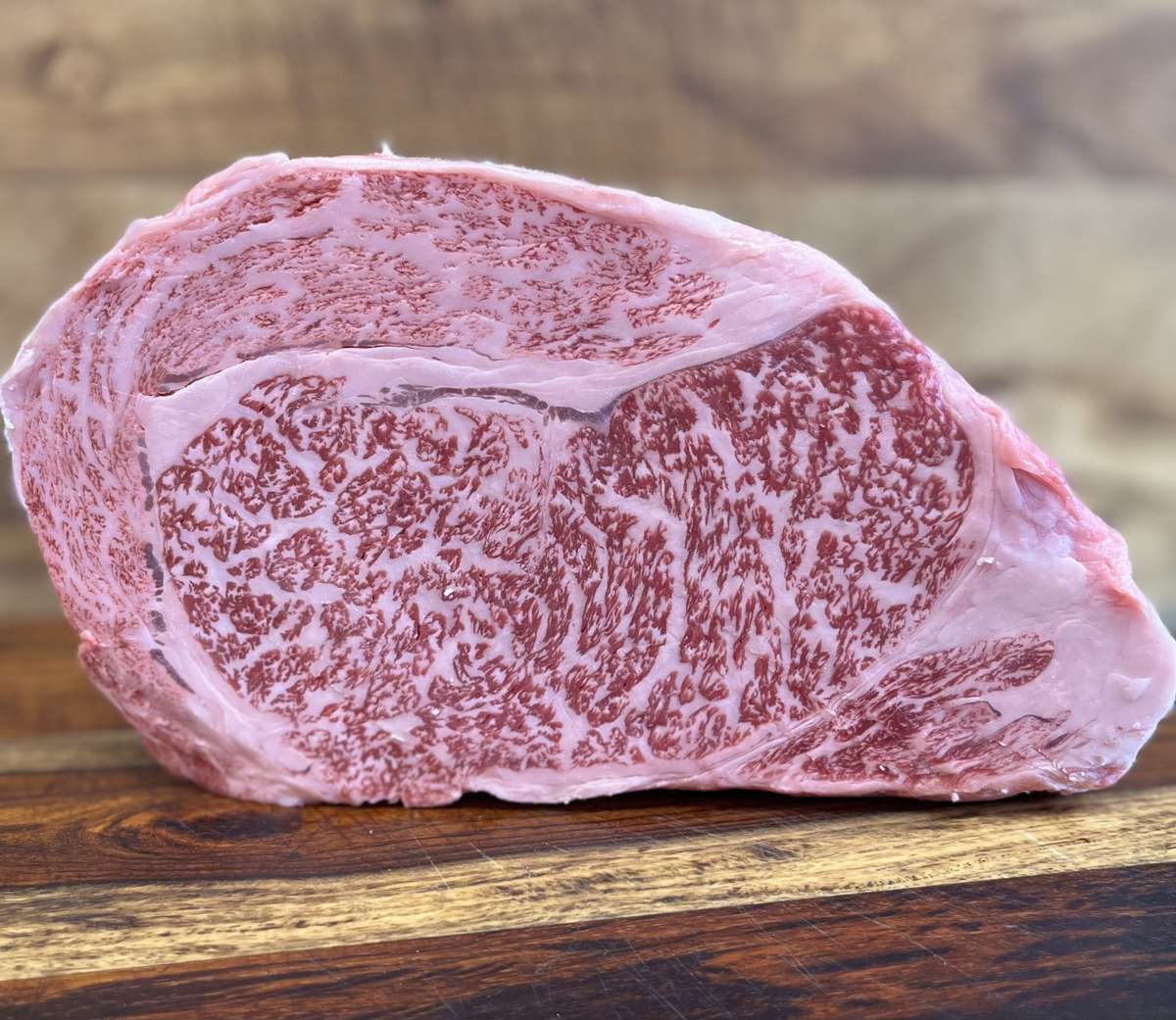
Wagyu beef is a category of Japanese cattle breeds prized for extreme intramuscular fat distribution, a trait that is largely genetic rather than a product of feeding or environment alone. That inherited marbling produces a buttery texture and rich umami flavor that standard commercial beef may not achieve to the same degree.
This guide covers what makes Wagyu biologically and genetically distinct, the four recognized Japanese breeds and how they differ, Japan's A5 and BMS grading systems alongside American alternatives, Wagyu's origins and global spread, the raising practices that drive its cost, the most popular cuts and how marbling affects each one, proper cooking technique, and how to verify authenticity before you buy.
Wagyu's marbling advantage begins at the genetic level, where inherited traits cause intramuscular fat to accumulate within skeletal muscle rather than around it. That fat is rich in oleic acid, a monounsaturated fatty acid with a lower melting point than the saturated fats dominant in conventional beef, which is what creates the characteristic buttery mouthfeel.
Four breeds carry the Wagyu designation: Japanese Black, Japanese Brown, Japanese Shorthorn, and Japanese Polled. Japanese Black is the most commercially prominent, carrying more than 30% intramuscular fat and the dense MUFA concentration responsible for premium Wagyu's signature flavor. The other three breeds offer generally leaner profiles with distinct regional flavor characteristics.
Japan's grading system classifies beef across 15 stages combining yield grade and a 12-point Beef Marbling Standard, with A5 representing the highest achievable score across every quality criterion. American Wagyu uses the USDA's nine-degree marbling scale and typically involves crossbreeding with Angus, which lowers the genetic ceiling for marbling compared to fullblood Japanese animals.
Wagyu cattle outside Japan trace back to a small number of original imports beginning in 1976. American and Australian producers raise primarily crossbred animals, which reach harvest sooner and at more accessible price points than fullblood Japanese Wagyu. Fullblood purebreds require roughly two years to reach harvest under highly managed grain-finishing protocols, and each carcass is graded individually by the Japan Meat Grading Association, compounding the cost at every stage.
What Makes Wagyu Beef Different From Regular Beef?
Wagyu beef differs from regular beef primarily in its exceptional intramuscular fat distribution, genetics, and resulting flavor. The following sections cover how Wagyu marbling compares to standard beef grades, what genetic traits drive that fat distribution, and how the taste differs from conventional steak cuts.
How Does Wagyu Marbling Compare to Standard Beef?
Wagyu marbling surpasses standard beef by producing fat distributed throughout the muscle tissue itself, rather than concentrated along the exterior. The USDA requires only a "slightly abundant" minimum marbling level for its Prime grade, while Japan's Beef Marbling Standard (B.M.S.) runs from No. 1 to No. 12 across 15 grading stages, according to the Japan Meat Information Service Center. The highest Wagyu grades far exceed anything achievable under the USDA system. According to a study published in the International Journal of Food Science, extreme intramuscular lipid deposition in Wagyu breeds is largely inherited, with individual sires having a major impact on marbling outcomes. This genetic advantage means premium Wagyu consistently delivers marbling levels that standard commercial beef simply cannot replicate.
What Genetics Give Wagyu Its Unique Fat Distribution?
Wagyu's unique fat distribution results from inherited genetic traits that cause intramuscular fat to accumulate within skeletal muscle rather than around it. Research published in Frontiers in Animal Science found that as marbling score increases in bovine adipose tissue, oleic acid concentration rises while stearic acid decreases. Oleic acid is a monounsaturated fatty acid associated with a softer fat texture and lower melting point, which directly contributes to Wagyu's characteristic buttery mouthfeel. Standard beef breeds do not carry these same genetic expressions, making Wagyu's fat profile structurally and chemically distinct.
How Does Wagyu Taste Different From Other Steak Cuts?
Wagyu tastes different from other steak cuts because its high intramuscular fat content melts at a lower temperature, coating the palate with a rich, buttery flavor that conventional beef cannot match. That elevated fat content also affects how heat moves through the meat during cooking. Choosing the right cookware matters here: According to Virginia Tech's O'Keefe, cast iron pans have high thermal mass and heat emissivity, making them well suited for retaining heat during cooking, including when searing Wagyu. The combination of superior marbling and careful cooking technique is what separates a great Wagyu experience from an ordinary steak. At Beauty and the Butcher in Coral Gables, Chef Jeremy Ford's kitchen applies this same principle to its Australian Wagyu preparations, where sourcing integrity and precise technique are central to the restaurant's butchery-focused identity.
What Are the Types of Wagyu Beef?
The types of Wagyu beef are defined by four distinct Japanese breeds, each recognized by Japan's Ministry of Agriculture, Forestry and Fisheries: Japanese Black, Japanese Brown, Japanese Shorthorn, and Japanese Polled. Each breed differs in marbling potential, flavor profile, and regional prevalence.
Japanese Black (Kuroge Washu)
Japanese Black is the most commercially prominent Wagyu breed and the primary source of the ultra-marbled beef prized worldwide. According to the Asian-Australasian Journal of Animal Sciences, the eating quality of beef produced by Japanese Black cattle is excellent, with more than 30% intramuscular fat and a significant concentration of monounsaturated fatty acids (MUFAs). This dense fat distribution produces the buttery texture and rich umami flavor that define premium Wagyu. For serious steak enthusiasts, Japanese Black is the benchmark breed against which all other Wagyu is measured.
Japanese Brown (Akage Washu)
Japanese Brown cattle, also known as Akaushi or Red Wagyu, produce beef with less marbling than Japanese Black but with a notably beefy, robust flavor. The breed is primarily raised in Kumamoto and Kochi prefectures. Its leaner fat profile makes it a practical choice for diners who want the Wagyu distinction with a lighter richness.
Japanese Shorthorn (Nihon Tankaku Washu)
Japanese Shorthorn is a leaner breed concentrated in the Tohoku and Hokkaido regions of northern Japan. It produces beef characterized by a clean, mineral-forward flavor rather than heavy marbling. The breed is valued more for its hardiness and grazing adaptability than for fat accumulation.
Japanese Polled (Mukaku Washu)
Japanese Polled is the rarest of the four Wagyu breeds, with a very small population concentrated in Yamaguchi Prefecture. It produces lean beef similar in profile to Japanese Shorthorn. Its scarcity makes it uncommon in international markets, including the United States.
What Is the Wagyu Grading System and What Do the Grades Mean?
The Wagyu grading system combines yield grade and quality grade to classify beef by fat distribution and overall eating quality. The following sections cover what A5 means, how the BMS marbling scale works, and how American grading differs from Japan's system.
What Does the A5 Grade Mean in Japanese Wagyu?
The A5 grade means a cut has achieved the highest possible score across all quality criteria evaluated in Japan's official grading system. The "A" refers to yield grade (meat output from the carcass), while "5" represents the top quality score, which assesses marbling, color, brightness, firmness, and fat quality. A5 is the pinnacle designation, reserved for cattle whose flesh scores at the highest levels across every evaluated category.
Appearance alone is not a reliable indicator of doneness. According to Yaohua "Betty" Feng, assistant professor of food science at Purdue, published in the Journal of Food Protection, cutting through meat to check for pink coloring doesn't confirm food safety. Using a thermometer is always the safer approach when cooking premium cuts.
How Is Wagyu Graded on the BMS Marbling Scale?
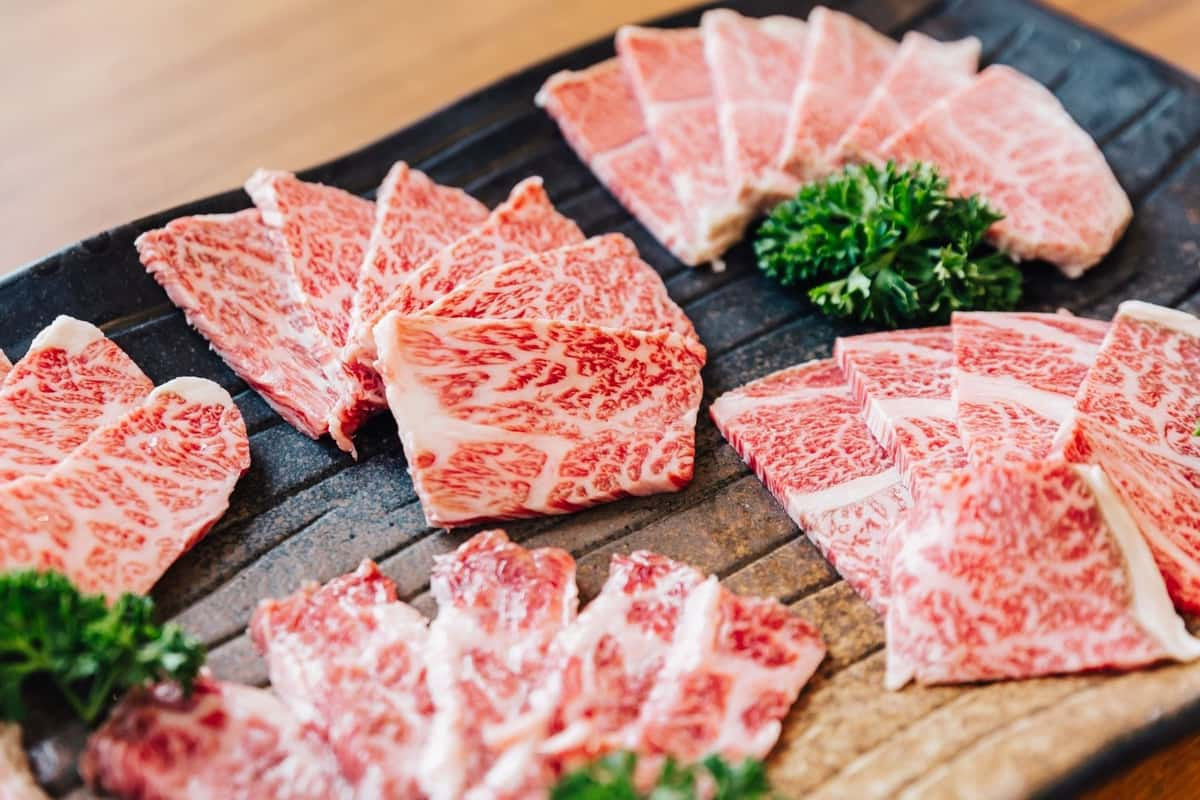
The Beef Marbling Standard (BMS) is Japan's official scale for measuring intramuscular fat distribution in beef. According to the Japan Meat Information Service Center, beef is graded in 15 stages combining yield and quality grades, with BMS ranging from No. 1 (least marbling) to No. 12 (most marbling). Research indicates that BMS No. 1 corresponds to roughly 0% relative fat area, while BMS No. 12 reaches approximately 50%.
The BMS grades map to quality scores as follows:
|
BMS Range |
Quality Grade |
Official marbling descriptor |
|
No. 1 |
Grade 1 |
Very scarce |
|
No. 2 |
Grade 2 |
Somewhat scarce |
|
No. 3–4 |
Grade 3 |
Standard |
|
No. 5–7 |
Grade 4 |
Somewhat abundant |
|
No. 8–12 |
Grade 5 |
Very abundant |
How Does American Wagyu Grading Differ From Japanese Grading?
American Wagyu grading differs from Japanese grading by applying USDA standards rather than Japan's BMS-based system. According to South Dakota State University's Department of Animal Science, the USDA recognizes nine degrees of marbling, compared to Japan's 12-point BMS scale. The Japan Meat Grading Association grades each carcass individually using nationally uniform carcass-trading standards, with criteria that differ from those used by the USDA.
American Wagyu cattle are often crossbred with Angus, which can result in lower average marbling levels compared to fullblood Japanese Wagyu. This means even highly marbled American Wagyu may differ in marbling from Japanese A5 beef, which falls within the BMS No. 8–12 range. For buyers, understanding which grading system applies to a product is essential to setting accurate quality expectations.
Where Does Wagyu Beef Come From?
Wagyu cattle originated in Japan and have since spread to the United States and Australia, where producers raise both fullblood and crossbred animals. The following sections cover Japan's breeding history, American Wagyu crossbreeding, and Australian production.
What Is the Origin of Wagyu Cattle in Japan?
The origin of Wagyu cattle in Japan traces back to native Japanese cattle selectively bred over centuries for draft work and, eventually, beef production. In the early 1900s, Japan crossbred native cattle with imported breeds, including Braunvieh, Simmental, Ayrshire, Devon, Shorthorn, and Holstein, to increase size and meat yield. After body size ballooned and meat quality declined, Japan halted crossbreeding and began intra-breeding, establishing the Japanese Black breed in 1944. According to a review published in the Asian-Australasian Journal of Animal Sciences, this selective isolation produced the genetic foundation responsible for Wagyu's signature marbling. Research published in Genes (MDPI) further confirms that Japanese Black cattle carry a unique phenotype in which ectopic intramuscular fat accumulates directly in skeletal muscle, a trait driven by specific genetic regulators.
How Is American Wagyu Different From Authentic Japanese Wagyu?
American Wagyu is different from authentic Japanese Wagyu primarily because it is a crossbred animal, not a fullblood or purebred Japanese strain. According to Oklahoma State University's Breeds of Livestock, the original U.S. import in 1976 consisted of just two Tottori Black and two Kumamoto Red Wagyu bulls, with meaningful imports resuming only in 1993 and 1994. Some American Wagyu cattle range from 50% to 75% Wagyu genetics, crossed with breeds such as Angus, which can produce a larger animal with moderate marbling. Washington State University's Department of Animal Sciences notes that percentage Wagyu cattle are typically harvested at around 18 months, compared to roughly 2 years for fullblood animals, reflecting the leaner growth profile of crossbreds.
What Is Australian Wagyu and How Does It Compare?
Australian Wagyu is beef produced from Wagyu-genetics cattle raised in Australia, typically as crossbreds on large-scale feedlot operations. Australia has built one of the largest Wagyu industries outside Japan; the Australian Wagyu Association now maintains a genomics database covering more than 400,000 individuals, demonstrating the scale and scientific rigor of the sector. Australian Wagyu is generally crossbred with Angus or Holstein cattle, producing marbling levels that can rival fullblood Japanese product at a more accessible price point. For diners seeking premium Wagyu, understanding these regional distinctions helps set expectations around marbling intensity, flavor, and grade certification.
How Is Wagyu Beef Raised and Why Does It Cost So Much?
Wagyu beef costs more because raising it demands significantly more time, specialized feed, and careful management than conventional cattle production. The sections below cover feeding practices, harvest timelines, and the pricing factors unique to authentic Japanese Wagyu.
What Feeding Practices Are Used to Raise Wagyu Cattle?
The feeding practices used to raise Wagyu cattle combine high-energy grain diets with extended finishing periods designed to maximize intramuscular fat development. Cattle are typically fed a calorie-dense mix of grains such as corn, barley, and rice bran over a prolonged finishing phase. According to Oklahoma State University Extension, finishing cattle on average consume 2% to 3% of their body weight in feed on a dry matter basis, and are fed twice daily to prevent digestive upset and support consistent intake. Because Wagyu require far longer finishing periods than commodity beef cattle, total feed costs accumulate substantially before a single animal reaches harvest weight.
How Long Does It Take to Raise a Wagyu Cow to Slaughter?
Raising a Wagyu cow to slaughter takes considerably longer than raising standard beef cattle. Washington State University's Department of Animal Sciences reports that purebred and fullblood Wagyu are routinely harvested at around 2 years old, while percentage Wagyu ranging from 50% to 75% genetics are often harvested at around 18 months. By comparison, conventional commodity beef cattle typically reach market weight closer to 14 to 16 months. That extended timeline translates directly into higher labor, feed, land, and overhead costs per animal.
Why Is Authentic Japanese Wagyu So Expensive?
Authentic Japanese Wagyu is expensive because of compounding production costs across genetics, feed, time, and strict grading oversight. The Japan Meat Grading Association grades each carcass individually using nationally uniform carcass-trading standards, adding another layer of quality control that increases cost. Beyond grading, the genetics required to produce high-BMS marbling are carefully managed through controlled breeding programs with limited supply. Export regulations from Japan further restrict volume, keeping global availability low. In practice, the price of authentic A5 Japanese Wagyu reflects every stage of a production chain that cannot be meaningfully shortened without sacrificing the marbling quality that defines the product.
What Are the Most Popular Wagyu Beef Cuts?
The most popular Wagyu beef cuts are ribeye, striploin, tenderloin, and brisket. Each cut expresses Wagyu's signature marbling differently, offering distinct textures, flavors, and ideal preparation methods.
What Is Wagyu Ribeye and Why Is It Highly Sought After?
Wagyu ribeye is highly sought after because its location along the upper rib section accumulates exceptionally dense intramuscular fat, producing the most visually striking marbling of any cut. That fat melts during cooking, basting the meat from within and delivering a rich, buttery flavor unmatched by standard ribeye. The cut retains moisture under high heat, making it forgiving for home cooks and remarkable in professional kitchens. For diners who want the fullest expression of Wagyu's marbling potential in a single slice, ribeye is the definitive choice.
What Is Wagyu Striploin and How Is It Best Prepared?
Wagyu striploin is a loin cut with firm texture and moderate marbling, best prepared over high, dry heat such as a cast-iron sear or open-flame grill. Its denser muscle structure holds its shape better than ribeye, making it easier to slice cleanly. The fat distribution is even but less intense, offering a more balanced bite for diners who prefer pronounced beef flavor alongside richness rather than fat-forward decadence. A simple salt crust and a quick, hard sear on each side is the most effective preparation.
What Is Wagyu Tenderloin and Who Is It Best For?
Wagyu tenderloin is best for diners who prioritize texture over fat intensity. Cut from the psoas major muscle, which performs almost no physical work, tenderloin is the most tender cut in the animal with the least connective tissue. In Wagyu, marbling elevates a cut that is already lean by beef standards, adding subtle richness without the pronounced fat of ribeye or brisket. It suits guests who find heavily marbled cuts overwhelming, making it a natural entry point into premium Wagyu dining.
What Is Wagyu Brisket and How Does Marbling Affect It?
Wagyu brisket is a large, tough pectoral cut that marbling transforms through slow, low-temperature cooking. In standard beef, brisket requires long braising to break down collagen; in Wagyu, elevated intramuscular fat accelerates moisture retention and flavor development during that same process. Research published in the journal Animal Genetics found that the FABP4 genotype significantly affected marbling score (P = 0.0398) and subcutaneous fat depth (P = 0.0246), confirming that fat deposition in Wagyu is genetically regulated down to the tissue level. That genetic advantage means Wagyu brisket carries fat in and around muscle fibers uniformly, producing slices that stay moist and tender even at the edges of a long smoke or braise.
How Should Wagyu Beef Be Cooked to Preserve Its Quality?
Wagyu beef should be cooked using methods that protect its high fat content and avoid rendering the marbling too quickly. The sections below cover ideal internal temperatures, seasoning approaches, and the best cooking methods for different Wagyu cuts.
What Internal Temperature Is Best for Cooking Wagyu Steak?
The USDA-recommended minimum safe internal temperature for cooking Wagyu steak is 145°F (63°C), followed by at least a three-minute rest, which allows the steak to reach the recommended food-safety standard. The USDA Food Safety and Inspection Service states that all beef should reach minimum safe internal temperatures as measured with a food thermometer, though consumers may choose higher temperatures based on personal preference.
For precision, sous vide is particularly well-suited to Wagyu. According to the University of Illinois Extension, a sous vide cooker uses a heated metal coil to warm water to a constant low temperature with no hot or cool spots, making it ideal for holding Wagyu at an exact target temperature throughout cooking.
Should You Season Wagyu Beef Before Cooking?
Wagyu beef should be seasoned minimally before cooking. Because its marbling delivers rich, complex flavor on its own, heavy seasoning competes with rather than complements the beef. Coarse salt and freshly cracked black pepper applied just before cooking is the standard professional approach.
Herbs can extend flavor without overpowering the meat. Seasoning Wagyu shortly before cooking can temporarily draw out surface moisture, which may interfere with the sear and reduce crust development if the surface remains wet.
What Cooking Methods Are Best Suited for Wagyu Cuts?
The best cooking methods for Wagyu cuts are high-heat searing in a cast iron pan, sous vide followed by a finishing sear, and teppanyaki-style griddle cooking. Each method suits different cuts:
- Cast iron searing: Best for ribeye and striploin, where a fast, intense sear builds a crust while leaving the interior rare.
- Sous vide with sear: Ideal for thicker cuts like tenderloin, allowing precise temperature control before finishing with a short sear.
- Teppanyaki griddle: Traditional for A5 Japanese Wagyu, where thin slices cook quickly with minimal contact time.
- Low-and-slow smoking: Suited to Wagyu brisket, where extended cook time breaks down connective tissue while preserving fat.
Avoid prolonged direct high heat, which rapidly renders the high-fat marbling and diminishes the buttery texture that defines Wagyu's eating quality.Restaurants that serve premium Wagyu, such as Beauty and the Butcher in Coral Gables, may apply these same principles using methods like cast iron searing or other controlled cooking techniques to preserve the fat structure that makes each cut exceptional.
How Do You Find and Order Authentic Wagyu Beef?
Finding authentic Wagyu beef requires knowing what verification markers to look for and how to read product labels correctly. The following sections cover how to confirm authenticity and decode labeling details.
How Can You Tell If Wagyu Beef Is Authentic?
Authentic Wagyu beef is identifiable through official grading documentation, breed certification, and traceable origin records. The Japan Meat Grading Association grades each carcass individually using nationally uniform carcass-trading standards, so genuine graded Japanese Wagyu should have traceable grading and origin documentation. For American or Australian Wagyu, look for breed registry documentation from recognized associations.
Key authenticity indicators include:
- An official JMGA grade certificate for Japanese Wagyu
- Breed registry paperwork confirming fullblood or purebred lineage
- A traceable lot number or individual animal ID
- Retailer or restaurant transparency about sourcing country and breed type
Without documentation, claims of "Wagyu" may refer to crossbred cattle with far lower marbling. Beauty and the Butcher sources its Wagyu with the same emphasis on ingredient integrity that defines its broader menu philosophy, a commitment Chef Jeremy Ford has carried from his Michelin-starred work into this Coral Gables steakhouse.
What Should You Look for on a Wagyu Beef Label?
A Wagyu beef label should display breed designation, country of origin, and marbling grade. These three elements distinguish genuine Wagyu from loosely labeled imitations sold at a premium.
Reliable labels include the following details:
- Breed designation: "Fullblood Wagyu," "Purebred Wagyu," or a percentage (e.g., 50% Wagyu F1 cross)
- Country of origin: Japan, United States, or Australia
- Marbling grade: BMS score for Japanese beef or USDA Prime-equivalent notation for American Wagyu
- Processor or ranch name: Traceability back to a named producer signals accountability
The ISO 22005:2007 standard establishes traceability requirements for feed and food chains, and reputable Wagyu suppliers align with these principles. In practice, any Wagyu product that omits breed percentage or grading information should be treated with caution.
Where Can You Experience Premium Wagyu Beef With Dry-Aged Expertise in Coral Gables?
You can experience premium Wagyu beef with dry-aged expertise in Coral Gables at Beauty and the Butcher, a contemporary American steakhouse led by Top Chef Season 13 winner Chef Jeremy Ford. The sections below cover what the restaurant offers and the key lessons from this guide.
Does Beauty and the Butcher Serve Premium Dry-Aged Wagyu Steaks in Miami?
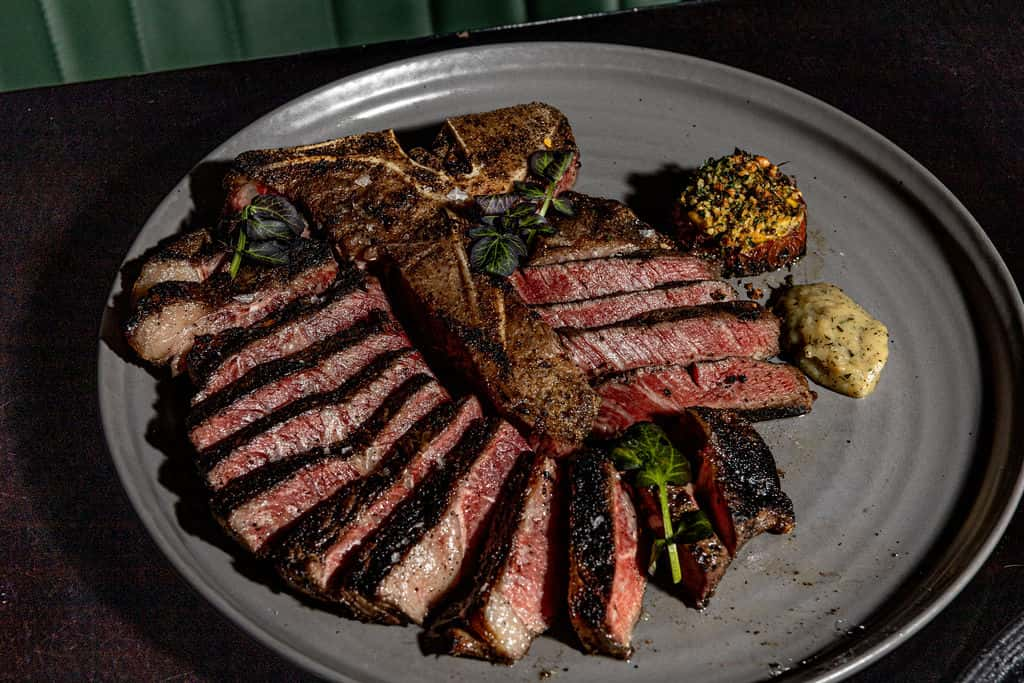
Beauty and the Butcher serves premium Wagyu and dry-aged steaks in Miami, including Australian Wagyu filet and dry-aged porterhouse among its butcher's cuts. Located at 6915 Red Road in Coral Gables, the restaurant was opened in fall 2023 under Chef Jeremy Ford, whose Michelin-starred background anchors the kitchen's approach to premium proteins. Beauty and the Butcher's butchery expertise spans both dry-aged American cuts and Australian Wagyu, making it a distinguished destination in Miami for discerning steak lovers. For anyone serious about experiencing Wagyu prepared with genuine craft, this is the right table to book.
What Are the Key Takeaways About Wagyu Beef We Covered in This Guide?
The key takeaways about Wagyu beef from this guide are:
- Genetics drive marbling. Wagyu's exceptional intramuscular fat is largely inherited, with individual sires producing the primary variation in marbling scores.
- Four recognized Japanese breeds exist, including Japanese Black, Japanese Brown, Japanese Shorthorn, and Japanese Polled — each with distinct flavor and fat profiles.
- The Japanese A5/BMS grading system measures yield, color, texture, and marbling on a 12-point scale, setting standards no USDA grade can fully replicate.
- American and Australian Wagyu are crossbred from imported Japanese genetics and offer accessible quality, though fullblood Japanese Wagyu remains the benchmark.
- Raising costs are high because purebred Wagyu cattle require roughly two years to reach harvest, with highly managed feeding protocols.
- Cooking technique matters. Lower heat, minimal seasoning, and precise temperature control preserve the delicate fat structure that defines Wagyu's taste.
- Authenticity requires traceability. Verified sourcing, breed documentation, and grading certificates distinguish genuine Wagyu from marketing imitations.
Beauty and the Butcher brings this full spectrum of Wagyu knowledge to the table, pairing sourcing integrity with Chef Jeremy Ford's award-winning culinary execution.