
How Steakhouses Dry Age Meat: The Restaurant Process
How Steakhouses Dry Age Meat: The Restaurant Process
Dry aging is a controlled beef preservation and flavor-development process in which whole primal cuts are stored uncovered in precisely managed cold environments, allowing enzymatic activity and surface moisture evaporation to transform raw beef into something fundamentally different from what enters the aging room.
This guide covers the science behind dry aging, the cuts and grades steakhouses select, the environmental conditions restaurants control, how aging timelines shape flavor, the equipment involved, the food safety standards governing every stage, how chefs prepare dry aged beef after aging is complete, and what all of this means for menu pricing at a contemporary American steakhouse like Beauty and the Butcher in Coral Gables.
Enzymatic breakdown and moisture evaporation work simultaneously during aging, with naturally present enzymes degrading muscle proteins into free amino acids that produce sweet and umami flavors, while reduced surface moisture allows the Maillard reaction to occur faster and more efficiently during cooking.
Steakhouses choose whole primals such as ribeye and strip loin, preferring USDA Prime for its marbling density, and control four primary environmental variables: temperature (34 to 36°F), humidity (85 to 90%), calibrated airflow, and UV lighting, across aging timelines that range from 21 days to well beyond 60.
Purpose-built aging rooms and commercial dry aging cabinets provide the precision that standard walk-in coolers cannot, while formal HACCP monitoring systems and pathogen controls govern every day of the program.
Trimming the hardened pellicle, absorbing yield losses up to 9.66% at 42 days, and adjusting cooking technique for lower-moisture beef are the final steps that connect weeks of careful aging to what reaches the plate.
What Is Dry Aging and Why Do Steakhouses Use It?
Dry aging is a controlled beef preservation and flavor-development process in which whole cuts are stored uncovered in precisely managed cold environments. The following sections cover what happens biochemically during aging, how dry aging differs from wet aging, and why premium steakhouses choose it.
What Actually Happens to Meat During the Dry Aging Process?
The dry aging process works by triggering two simultaneous changes inside the beef: enzymatic protein breakdown and surface moisture evaporation. Naturally present enzymes degrade muscle proteins into peptides and free amino acids, with aliphatic amino acids producing sweetness and sulfur-containing amino acids (cysteine, methionine) along with glutamate and aspartate generating the umami flavor associated with MSG, according to a study in the Journal of Animal Science and Technology.
Concurrently, volatile compound production and amino acid liberation increase significantly over time. Research published by Iowa State University's Meat and Muscle Biology journal confirmed that volatile compounds and free amino acid concentrations rose (P < 0.01) as aging progressed, with no change in fatty acid composition, suggesting microbial metabolic activity as a likely driver.
As surface moisture leaves, the meat's exterior temperature rises more readily during cooking. North Carolina State University researchers note that this moisture loss allows surface temperatures to exceed 350°F, a temperature at which Maillard browning occurs quickly and efficiently, producing the deep crust that defines a premium steak.
How Does Dry Aging Differ From Wet Aging?
Dry aging differs from wet aging in its environment, flavor outcome, and yield: dry aging exposes beef to open air under controlled conditions, while wet aging seals beef in vacuum packaging throughout the process.
Both methods share the same optimal temperature range. A review published in PubMed Central confirmed that dry aging literature consistently reports 0–4°C (32–39.2°F) as the target, identical to wet aging storage requirements. The critical divergence is what happens to the meat's surface and biochemistry within that range.
Flavor distinction is measurable. A study in Foods analyzed 32 samples across 7, 16, 35, and 60-day aging periods and found that raw meat toughness decreased up to 35 days, though cooking largely equalized tenderness across durations. Texture also becomes structurally different: a Texas A&M University study recorded dry-aged beef requiring an average cutting time of 331.6 seconds versus 243.1 seconds for wet-aged beef (P < 0.0001), indicating a difference in cutting time between the aging treatments.
Free fatty acids also behave differently across methods: a University of Nebraska–Lincoln study found that free fatty acids increased significantly after 28 days regardless of airflow, a reaction tied to the flavor depth dry-aged beef develops that vacuum-sealed wet aging cannot replicate.
Why Do High-End Steakhouses Prefer Dry Aged Beef?
High-end steakhouses prefer dry aged beef because it delivers a concentration of flavor, tenderness, and surface texture that no accelerated alternative produces. The moisture evaporation that makes dry aging costly is precisely what makes the result exceptional: a denser, more intensely flavored steak with a surface that responds differently to high heat. At Beauty and the Butcher in Coral Gables, this philosophy sits at the core of the restaurant's identity, the 'Butcher' half of the concept is built around premium meats and dry-aged cuts, with Chef Jeremy Ford's culinary direction shaping how that expertise reaches the plate.
From a kitchen perspective, the reduced moisture content allows the Maillard reaction to initiate faster and at higher efficiency, giving chefs greater control over crust development without overcooking the interior. That technical advantage matters as much as the flavor profile itself.
Steakhouses serving discerning diners in competitive markets like Coral Gables, where the City of Coral Gables reports more than 100 cafes and restaurants, use dry aged beef as a tangible differentiator, one that guests can taste, and one that signals genuine investment in craft over convenience.
What Cuts of Beef Do Steakhouses Choose for Dry Aging?
Steakhouses choose specific cuts and beef grades for dry aging based on fat content, muscle structure, and yield efficiency. The sections below cover why whole primals are preferred over individual steaks and which USDA grades produce the best results.
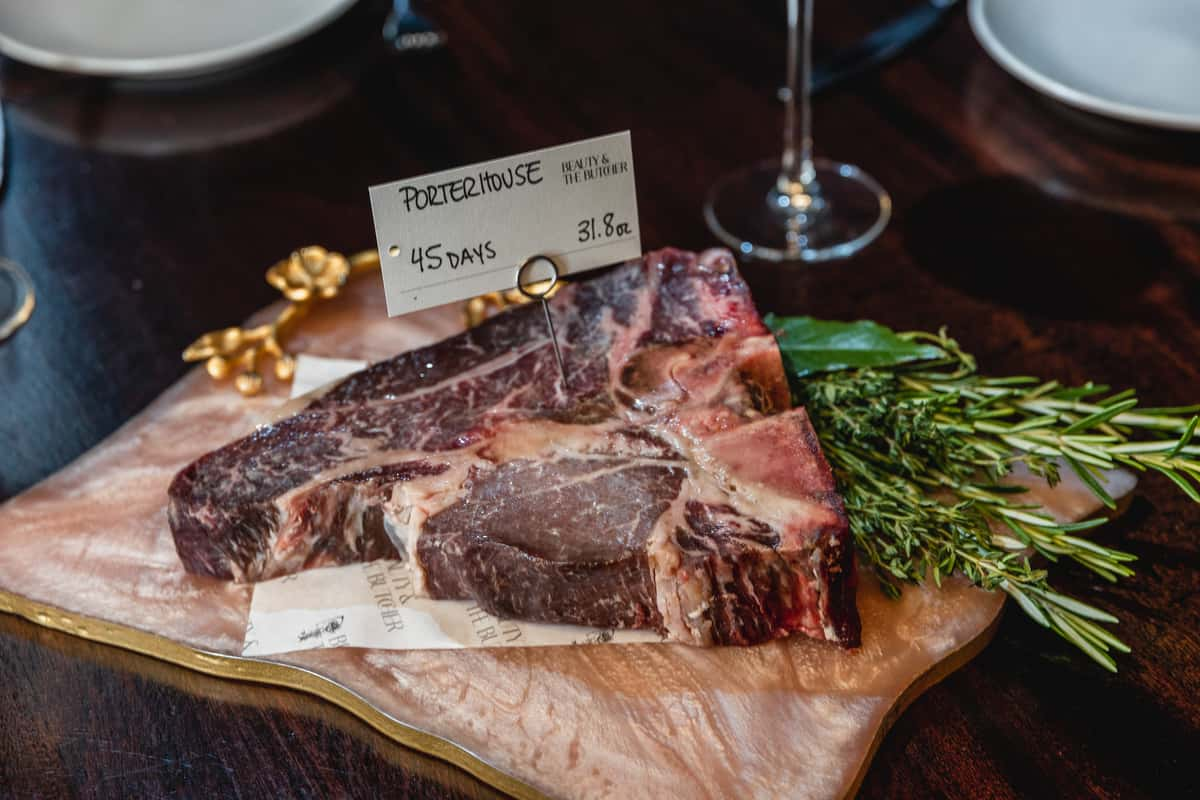
Why Do Steakhouses Dry Age Whole Primals Instead of Individual Steaks?
Steakhouses dry age whole primals instead of individual steaks because the intact fat cap and outer surface layer act as a natural protective barrier during the aging process. When beef is cut into individual steaks before aging, the exposed lean surface dries out excessively, resulting in disproportionate yield loss and an uneven pellicle. Whole primals such as the ribeye, strip loin, and short loin retain their fat coverage, which shields the muscle underneath while enzymatic tenderization works from within. This approach gives butchers far more control: they trim the outer crust after aging and portion steaks to precise thickness, ensuring each plate receives the full benefit of the process. Beauty and the Butcher's menu reflects this commitment to craft, offering cuts such as a 35-day dry-aged porterhouse alongside Australian Wagyu - selections that represent the outcome of this careful, primal-first approach to aging.
Which Beef Grades Are Best Suited for Dry Aging?
The beef grades best suited for dry aging are USDA Prime and, secondarily, USDA Choice. According to the U.S. Department of Agriculture's Agricultural Marketing Service, Prime beef comes from young, well-fed cattle with at least slightly abundant marbling, the intramuscular fat distributed between muscle fiber bundles, and is generally sold in upscale restaurants. Choice beef is high quality but carries less marbling than Prime. Marbling matters for dry aging because intramuscular fat insulates the muscle during moisture evaporation and contributes fat-soluble flavor compounds as aging progresses. Leaner grades lose moisture faster relative to their flavor payoff, making the economics less favorable. For premium steakhouses, USDA Prime is the clear choice when the goal is maximum flavor development alongside tender texture.
What Conditions Do Restaurants Control During Dry Aging?
Restaurants control three primary conditions during dry aging: temperature, humidity, and airflow, with UV lighting sometimes used as an additional control. Each variable directly affects meat safety, moisture loss, and flavor development throughout the aging period.
What Temperature Must a Dry Aging Chamber Maintain?
A dry aging chamber should generally maintain a temperature of approximately 34 to 36 degrees Fahrenheit under the University of Missouri Extension's recommendations. According to the University of Missouri Extension's recommendations for aging beef, this range helps limit microbial growth while allowing enzymatic activity to continue breaking down muscle proteins for tenderness.
What Humidity Level Is Required for Proper Dry Aging?
The humidity level recommended by the University of Missouri Extension for proper dry aging is 85 to 90 percent relative humidity. This range slows excessive surface dehydration while still allowing the controlled moisture loss that concentrates flavor. A study indexed in PubMed found that lower relative humidity accelerates moisture loss in the first three days without significantly affecting total moisture loss over 42 days, suggesting that humidity control can influence moisture loss early in the aging cycle. Getting humidity right from day one is the single most underappreciated variable in the process.
How Does Airflow Affect the Dry Aging Process?
Airflow affects the dry aging process by regulating surface drying and microbial conditions on the meat. The University of Missouri Extension recommends 15 to 20 linear feet per minute at the meat surface. Meat & Livestock Australia's guidelines specify that airflow faster than 0.5 m/s reduces product yield without improving food safety, meaning excessive airflow can increase product losses without an identified food-safety benefit.
Why Is UV Lighting Used in Professional Dry Aging Rooms?
UV lighting is used in professional dry aging rooms to suppress airborne mold and bacterial growth without applying any chemical treatment to the meat surface. It provides a passive, continuous layer of microbial control that complements temperature, humidity, and airflow management. Together, these environmental controls form part of the framework that separates a properly controlled aging program from ordinary refrigerated storage.
How Long Do Steakhouses Dry Age Their Beef?
Steakhouses dry age beef across a range of timelines, commonly from 21 to 42 days, sometimes extending to 90-plus days, with each phase producing potentially distinct changes in tenderness and flavor intensity. The sections below cover what happens at 21–30 days, 30–45 days, and beyond 60 days.
What Happens to Flavor Between 21 and 30 Days of Dry Aging?
Flavor between 21 and 30 days of dry aging develops as moisture loss concentrates the beef's natural taste compounds and enzymatic breakdown begins softening muscle fibers meaningfully. This window is where most fine-dining steakhouses find their entry point for dry-aged programs, because the flavor lift is noticeable without the sharp intensity of longer runs.
According to Montana State University Extension, commercial operations typically age just 7 to 10 days to balance tenderness, flavor, and economics. The 21-to-30-day range represents a deliberate step beyond that standard, trading yield for a more pronounced, buttery flavor that commodity programs cannot achieve.
How Does Flavor Develop Between 30 and 45 Days?
Flavor between 30 and 45 days develops through accelerating enzymatic proteolysis, which releases free amino acids responsible for sweet and umami taste profiles, including glutamate and aspartate compounds associated with a natural MSG-like depth. Free fatty acids also increase significantly after 28 days, contributing richer, nuttier aromatic notes.
This range can represent a practical aging period for some premium steakhouse programs. The flavor gains may be meaningful, yet yield losses can remain manageable, making 30-to-45-day aging a possible target for some restaurants serving discerning diners who expect complexity without excessive shrinkage costs built into the menu price.
What Changes Occur Beyond 60 Days of Dry Aging?
Beyond 60 days of dry aging, the changes shift from tenderness gains toward intense aromatic and flavor transformation, as volatile compounds from lipid oxidation and microbial metabolism continue accumulating. Toughness decreases meaningfully up to 35 days on raw meat; past that threshold, flavor intensity rather than texture becomes the primary variable a chef is managing.
Chef Adam Perry Lang, speaking with the Institute of Culinary Education, noted: "There's no absolute. I've dry aged past 365 days, a full year. But the meat itself has to exhibit certain characteristics for me to take that meat on that journey." Extended aging beyond 60 days is a high-skill commitment, and the beef's starting quality, marbling, and fat coverage determine whether the result rewards the risk.
What Equipment Do Restaurants Use to Dry Age Meat?
Restaurants use three main categories of equipment to dry age meat: dedicated aging rooms, commercial dry aging cabinets, and specialty environmental features such as Himalayan salt walls. Each serves a distinct function in controlling temperature, humidity, and airflow.
How Is a Dedicated Dry Aging Room Different From a Walk-In Cooler?
A dedicated dry aging room differs from a walk-in cooler in its precision environmental controls, which a standard walk-in cannot reliably provide. Walk-in coolers are designed for general refrigerated storage; they lack the calibrated airflow, humidity regulation, and UV sterilization systems that dry aging requires. According to the University of Missouri Extension, aging rooms should maintain approximately 34 to 36°F, 85 to 90% relative humidity, and an airflow of 15 to 20 linear feet per minute at the meat's surface. Standard walk-ins are not engineered to hold these parameters consistently, making them unsuitable for a professional dry aging program without significant modification.
What Role Do Commercial Dry Aging Cabinets Play in Restaurants?
Commercial dry aging cabinets give restaurants a self-contained, purpose-built option for aging beef without converting an entire room. These units integrate refrigeration, humidity control, and ventilation into a single appliance, making them practical for steakhouses with limited dedicated storage space. They are particularly valuable for display aging, where visible hanging cuts become part of the dining room experience. Cabinets also allow restaurants to run smaller, rotating programs alongside larger cold storage. For a restaurant focused on premium cuts, a quality cabinet represents one of the most controllable investments in the aging process.
How Do Himalayan Salt Walls Contribute to the Aging Environment?
Himalayan salt walls may contribute to the dry aging environment by influencing humidity fluctuations within the aging space. A University of Arkansas study on salt block utilization during dry aging found that salt-supplemented dry aging cabinets exhibited lower humidity variation (average 71.52, standard deviation 4.7) compared to standard dry aging cabinets (average 70.76, standard deviation 7.9). Salt's hygroscopic properties allow it to absorb and release moisture, acting as a passive buffer against humidity swings. This stability supports more consistent pellicle formation and surface drying. Salt walls also contribute antimicrobial properties to the aging environment, offering a secondary layer of protection alongside primary temperature and airflow controls.
What Safety Standards Govern Restaurant Dry Aging Programs?
Safety standards governing restaurant dry aging programs include HACCP plans, documented aging procedures, temperature controls, pathogen monitoring, and regulatory compliance. The following sections cover how steakhouses prevent harmful bacterial growth and what monitoring systems keep aging conditions within safe parameters.
How Do Steakhouses Prevent Harmful Bacterial Growth During Aging?
Steakhouses prevent harmful bacterial growth during aging by maintaining precise temperature, humidity, and airflow conditions that inhibit pathogen activity. According to the European Food Safety Authority, dry aged beef can be considered as safe as fresh beef when aging is done for up to 35 days at a temperature of 3°C (37.4°F) or lower. Mold species such as Aspergillus and Penicillium can produce mycotoxins but are suppressed by keeping meat surface temperatures between -0.5°C and 3°C, relative humidity at 75–85%, and airflow at 0.2–0.5 m/s. Additionally, a USDA Food Safety and Inspection Service study found that dry chilling for 21 days effectively reduced E. coli O157:H7 and Salmonella on beef carcasses compared to conventional wet aging. Strict adherence to these parameters is, in practice, the single most effective bacterial control a program can implement.
What Monitoring Systems Do Restaurants Use to Track Aging Conditions?
The monitoring systems restaurants use to track aging conditions include continuous measurement of temperature, humidity, and airflow at Critical Control Points (CCPs) within a formal HACCP framework. The FDA defines HACCP monitoring as a planned sequence of observations or measurements to assess whether a CCP is under control and to produce an accurate record for future verification. In practice, this means calibrated digital sensors, automated data logging, and documented review schedules that generate the written records required for regulatory compliance. Businesses may be required to maintain HACCP plans alongside validation records, documented aging procedures, and controls to ensure only wholesome meat leaves the premises, depending on applicable regulations. Continuous electronic monitoring removes the guesswork and closes the gap between food safety policy and daily kitchen operations.
How Do Chefs Prepare Dry Aged Beef After the Aging Process?
Preparing dry aged beef requires removing the hardened outer crust, accounting for significant yield loss, and adjusting cooking technique to match the meat's lower moisture content. The sections below cover pellicle trimming, yield economics, and heat response.
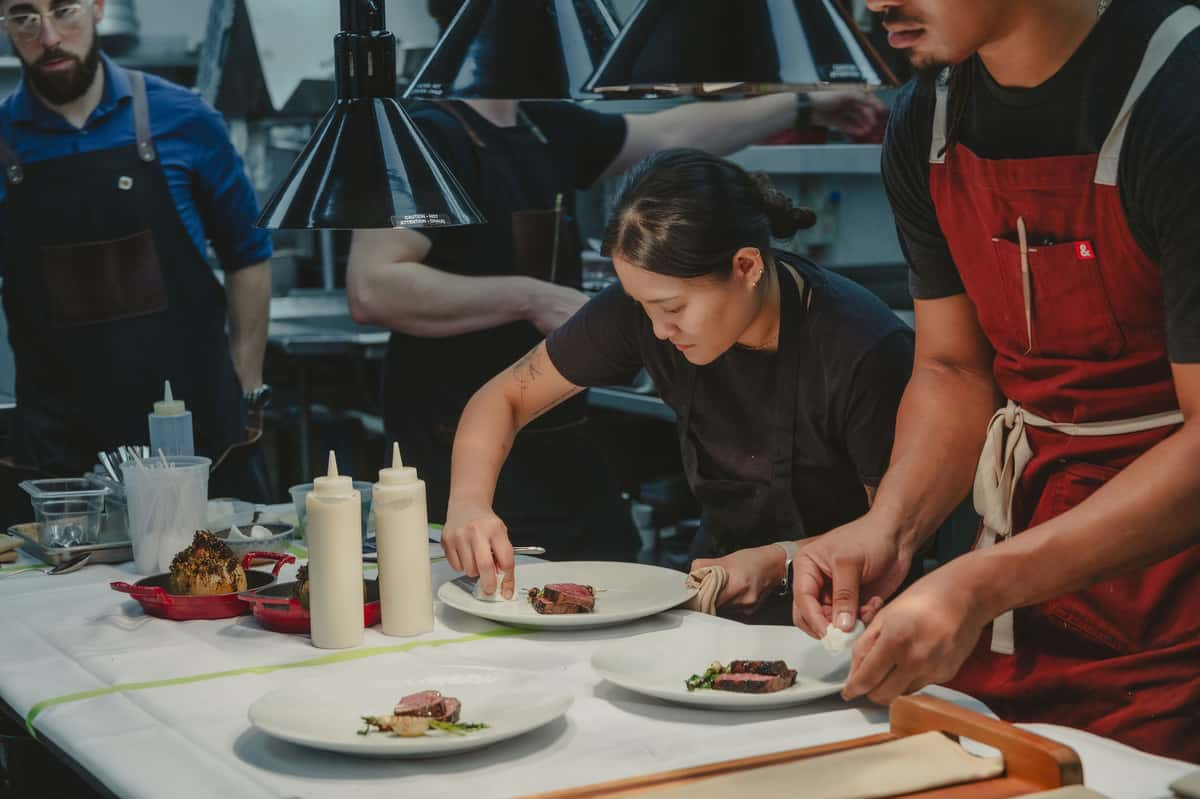
What Is the Pellicle and Why Must It Be Trimmed Before Cooking?
The pellicle is the dark, hardened outer crust that forms on beef during dry aging as surface moisture evaporates and oxidation occurs. It is generally trimmed before cooking because it may contain desiccated, off-flavored tissue that could negatively affect the final dish if left on the cut.
Trimming removes this inedible layer to expose the concentrated, deeply flavored meat beneath. The process requires a sharp knife and steady hand, as chefs work along the natural contours of the primal to minimize waste while ensuring no crust remains on the cooking surface. This step separates dry aging expertise from basic butchery.
How Much Yield Loss Does a Restaurant Expect From Dry Aging?
Yield loss from dry aging is substantial and increases with aging duration. According to research from the University of Nevada, Reno Experiment Station, dry aging extended to 42 days produced shrinkage of up to 9.66 percent, driven primarily by moisture loss, while wet-aged loins showed no significant yield reduction regardless of aging length.
Restaurants factor this shrinkage, plus pellicle trimming loss, directly into menu pricing. The combined result is a meaningfully smaller sellable portion from each primal compared to wet-aged alternatives. For steakhouses committed to a long-aged program, accepting this yield cost is simply the price of delivering a product that cannot be replicated through faster methods.
How Does Dry Aged Beef Respond Differently to Heat Than Fresh Beef?
Dry aged beef responds to heat more intensely than fresh beef because its lower residual moisture allows surface temperatures to climb faster, accelerating the Maillard reaction. Research published in Foods (University of Melbourne) found that concentrations of key odor-impact volatiles, including 3-hydroxy-2-butanone, 2-acetyl-2-thiazoline, and various alkyl-pyrazines, were significantly higher in dry aged beef than wet aged beef (p < 0.05), meaning the flavor compounds already present before cooking are far more concentrated.
Chefs adjust accordingly, using slightly lower heat exposure times and monitoring internal temperature carefully to avoid overcooking a cut that sears and colors faster than expected. The reduced water content that defines dry aging is also precisely what makes it cook differently, and that distinction rewards experienced hands in the kitchen.
Why Does Dry Aged Steak Cost More on a Restaurant Menu?
Dry aged steak costs more on a restaurant menu because the process involves significant yield loss, extended refrigeration time, premium beef grades, and skilled labor, all before a single steak reaches the plate. Beauty and the Butcher's approach to dry aging, anchored in Chef Jeremy Ford's award-winning culinary expertise and a menu built around premium, carefully sourced proteins, reflects exactly this investment in craft over convenience.
The Real Cost Drivers Behind Dry Aged Beef Pricing
The real cost drivers behind dry aged beef pricing are yield loss, time investment, and input quality. A University of Nevada, Reno study found that dry aging extended to 42 days produced shrinkage up to 9.66 percent due to moisture loss, compared to no meaningful yield reduction in wet-aged short loins. That lost weight means a restaurant pays for beef it cannot sell. Add weeks of dedicated refrigeration, precise environmental controls, and the labor required to trim the hardened pellicle before cooking, and the costs compound quickly. Premium USDA Prime beef, which commands higher wholesale prices, is the preferred starting point for any serious dry aging program. In a competitive restaurant market like Coral Gables, where the City of Coral Gables notes more than 100 cafes and restaurants, pricing must reflect both craft and cost to remain viable.
How Does Beauty and the Butcher Approach Dry Aged Premium Beef in Coral Gables?
Beauty and the Butcher approaches dry aged premium beef in Coral Gables by combining Chef Jeremy Ford's award-winning expertise with a premium meat program that sits at the heart of the restaurant's identity. The sections below cover what makes the program distinctive and the key takeaways from this article.
What Makes the Expert Butchery Program at Beauty and the Butcher Distinctive?
The expert butchery program at Beauty and the Butcher is distinctive because it treats dry aging as a culinary discipline rather than a commodity process. Led by Top Chef Season 13 winner Chef Jeremy Ford, the program features premium cuts including a 35-day dry-aged porterhouse alongside premium beef selections such as Australian Wagyu. Coral Gables supports this level of ambition: According to the City of Coral Gables, the area hosts more than 100 cafes and restaurants. Within that competitive landscape, Beauty and the Butcher's commitment to expertly prepared, butcher-led proteins is a genuine differentiator. The program reflects the restaurant's core identity: the "Butcher" half of a concept that balances premium meats with refined seafood and vegetable preparations under one roof.
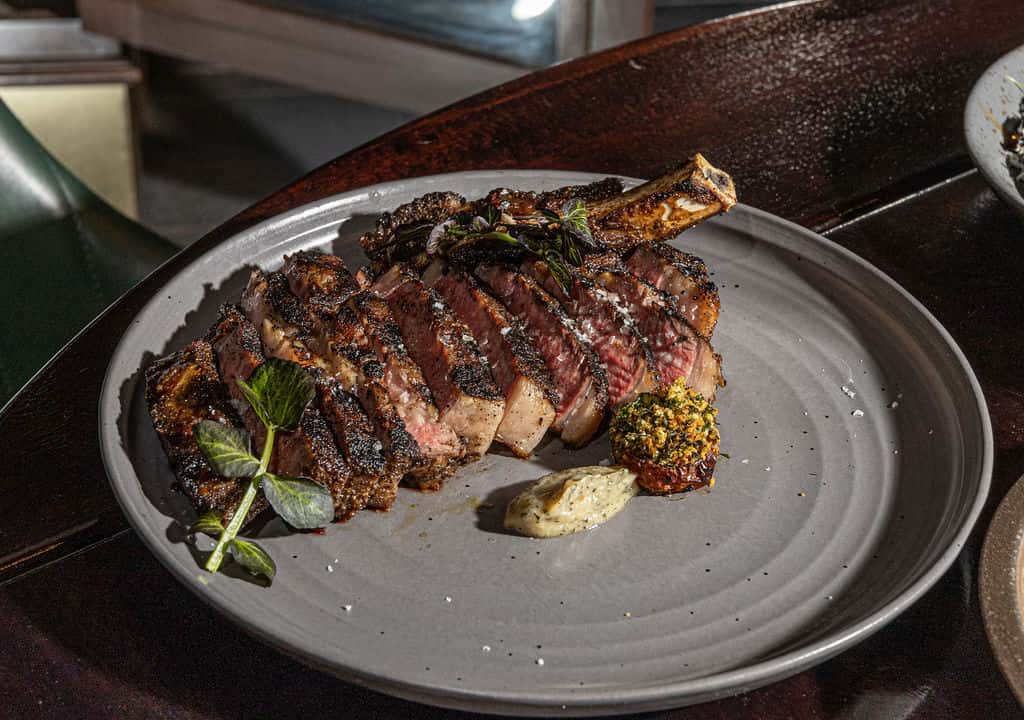
What Are the Key Takeaways About How Steakhouses Dry Age Meat That We Covered?
The key takeaways about how steakhouses dry age meat center on precision, patience, and purposeful craft. Every phase matters: temperature may be maintained between 34 and 36°F, humidity between 85 and 90 percent, and airflow calibrated to avoid excess yield loss, following the University of Missouri Extension's recommendations. Enzymatic breakdown tenderizes muscle fiber over weeks, while moisture evaporation concentrates flavor compounds that fresh beef simply cannot replicate. Yield shrinkage up to 9.66 percent at 42 days can contribute to a higher steak price, but the flavor payoff may justify the cost for some diners. Safety is non-negotiable, with HACCP monitoring protecting every stage. For diners in Coral Gables, Beauty and the Butcher translates all of this scientific rigor into a single, memorable plate.