
Dry vs. Wet Aged Steak: Guide
Dry vs. Wet Aged Steak: Guide
Dry vs. Wet Aged Steak: What's the Difference?
Dry aging and wet aging are the two primary methods used to tenderize beef and develop its flavor after slaughter, each producing distinctly different results in taste, texture, and cost.
This guide covers how aging works at the biological level, what sets dry aged and wet aged steak apart in flavor and texture, how each method affects cost and cut selection, how to cook both at home, and where to experience premium dry aged beef in Coral Gables.
Aging works by triggering enzymatic protein breakdown inside the muscle, which loosens fiber structure, releases taste-active compounds, and alters moisture levels. The method used determines whether that moisture evaporates or stays sealed in.
Dry aging exposes large beef subprimals to controlled airflow in a refrigerated environment, concentrating the remaining juices and producing a bold, nutty, intensely beefy flavor. Wet aging seals cuts in vacuum packaging, preserving moisture and delivering a cleaner, milder taste profile that most consumers recognize as classic beef.
Those flavor differences extend directly into texture and price. Dry aged beef loses significant moisture over weeks, which tightens muscle fibers and reduces usable yield, making it considerably more expensive than its wet aged counterpart. Wet aged cuts preserve nearly all their original weight, making them the cost-efficient standard across the commercial meat industry.
Cut selection, cooking method, and the decision between the two methods all follow from understanding what each process actually does to the beef. In Coral Gables, Beauty & the Butcher brings that craft to the table through Chef Jeremy Ford's dry aged program.
What Does Aging Do to a Steak?
Aging transforms beef by breaking down muscle proteins, concentrating flavor compounds, and altering moisture content. The sections below cover how aging affects texture, flavor development, and moisture loss.
How Does Aging Change the Texture of Beef?
Aging changes the texture of beef by triggering enzymatic protein breakdown, which loosens tight muscle fibers and produces a noticeably more tender bite. Natural enzymes called calpains attack the structural proteins holding muscle fibers together, progressively softening the meat over time. According to research published in Meat and Muscle Biology, surface mold in dry aging plays a supporting role: after 26 days, dry-aged beef with direct fungal application showed increased volatile compound intensity compared to uninoculated samples. Texture improvement is one of the most measurable and consistent benefits of both aging methods.
How Does Aging Develop the Flavor of a Steak?
Aging develops the flavor of a steak through proteolytic activity, which breaks proteins into smaller taste-active peptides, free amino acids, and nucleotides. These compounds are the direct building blocks of savory, complex beef flavor. The Beef Checkoff concluded that both tenderness and flavor development are aided by proteolytic activity during wet aging. Dry aging adds another dimension by concentrating these compounds as surface moisture evaporates, intensifying the overall flavor profile.
What Happens to Moisture in Beef During Aging?
Moisture in beef during aging behaves differently depending on the method used. In wet aging, the meat stays sealed in vacuum packaging, so moisture is retained almost entirely within the cut. In dry aging, moisture evaporates freely from the surface, shrinking the exterior and concentrating the remaining juices deeper in the muscle. This moisture loss is the primary reason dry-aged cuts weigh less at the time of sale, which directly contributes to their higher cost per pound.
What Is Dry Aged Steak?
Dry aged steak is beef that has been stored uncovered in a controlled environment to concentrate flavor and improve tenderness through moisture evaporation and enzymatic activity. The following sections cover how the process works, the conditions required, typical aging durations, and the resulting flavor profile.
How Is Dry Aging Done?
Dry aging is done by placing large beef cuts, typically subprimals, in an open-air refrigerated environment where air circulates freely around the meat. Unlike wet aging, the beef is never vacuum-sealed. Over time, surface moisture evaporates, concentrating the remaining juices deep into the muscle, while natural enzymes break down connective proteins to improve tenderness. The outer crust that forms is trimmed away before cutting and serving.
What Conditions Are Required for Dry Aging?
The conditions required for dry aging are precise temperature, humidity, and airflow controls maintained throughout the entire process. According to the University of Missouri Extension, the aging room must be kept at approximately 34 to 36 degrees Fahrenheit, with relative humidity at 85 to 90 percent and airflow of 15 to 20 linear feet per minute at the meat's surface. Certified equipment validated by the manufacturer is also required. These conditions prevent harmful bacterial growth while allowing beneficial enzymatic activity to proceed safely.
How Long Is Steak Typically Dry Aged?
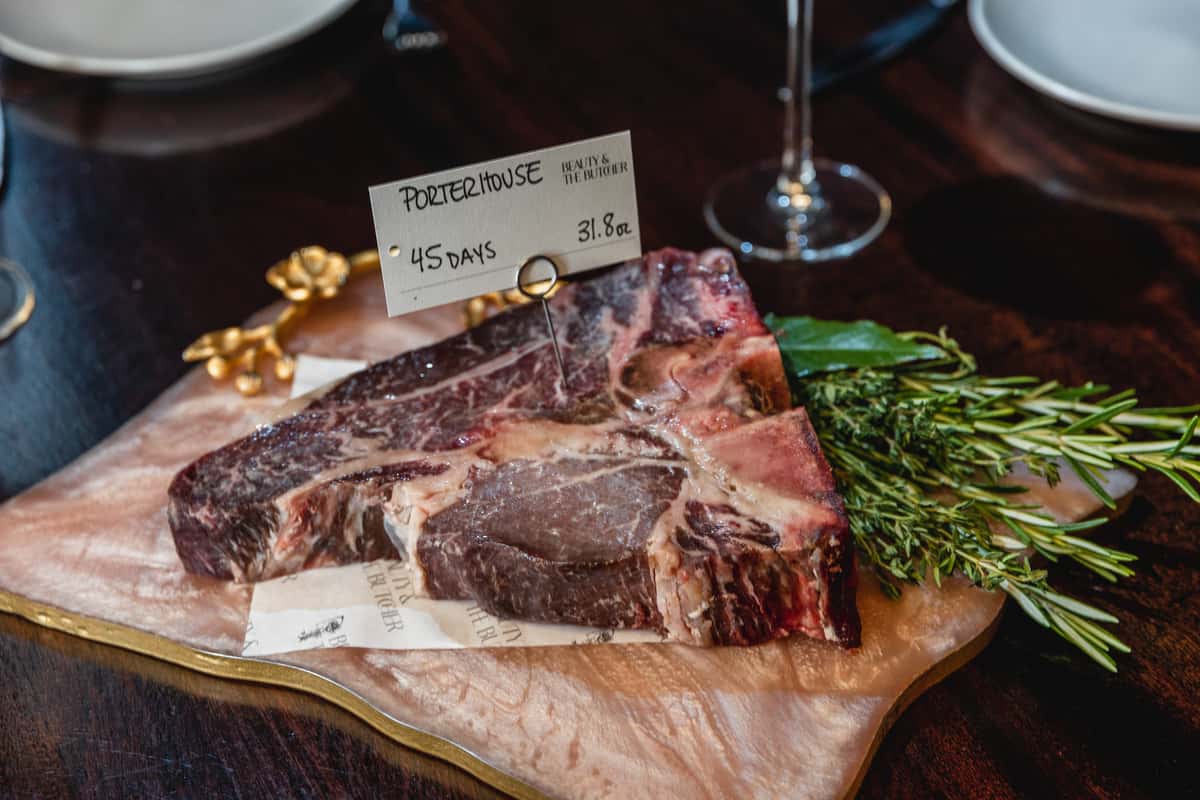
Steak is typically dry aged between 14 and 40 days, though extended programs can run considerably longer. A review published in PubMed Central notes that the preferred range is 28 to 55 days, with the U.S. Meat Export Federation suggesting a maximum of 70 days. Shorter periods deliver mild tenderness gains, while longer aging produces progressively more concentrated flavor and greater moisture loss.
What Does Dry Aged Steak Taste Like?
Dry aged steak tastes distinctly more intense than fresh or wet aged beef, with a pronounced nutty, rich, and deeply beefy flavor. Research published in the Journal of Animal Science and Technology confirms that during dry aging, chemical breakdown of proteins and fat constituents produces this more intense nutty and beefy character. The moisture loss that drives concentration also creates a firmer, denser texture with a satisfying chew. For steak lovers who prioritize bold, complex flavor over milder beef notes, dry aging delivers a profile that is genuinely difficult to replicate any other way.
What Is Wet Aged Steak?
Wet aged steak is beef that has been vacuum-sealed in plastic and refrigerated to allow natural enzymes to tenderize the meat over time. The sections below cover how the process works, how long it takes, and what flavor profile to expect.
How Is Wet Aging Done?
Wet aging is done by vacuum-sealing beef cuts in airtight plastic packaging and storing them in a refrigerated cooler. The sealed environment retains the meat's natural moisture and juices throughout the entire process. According to Q Open, wet aging is the most common and extensively practiced method in the meat industry, using vacuum-packaged beef sub-primals stored in a refrigerated cooler for a range of 3 to 102 days. Because no specialized equipment or humidity-controlled rooms are required, wet aging is far more cost-efficient to execute at scale than dry aging.
How Long Is Steak Typically Wet Aged?
Wet aged steak is typically aged anywhere from 3 to 102 days under refrigerated conditions. Most commercial operations keep cuts within the shorter end of that range, as extended aging offers diminishing returns without the flavor transformation seen in dry aging. The vacuum seal prevents moisture loss, so aging length does not significantly affect yield, making longer wet-aging periods operationally low-risk.
What Does Wet Aged Steak Taste Like?
Wet aged steak tastes clean, tender, and distinctly beefy, with a mild flavor profile that closely preserves the meat's natural character. Because the juices remain sealed inside the packaging, the beef retains its moisture without developing the concentrated or nutty complexity associated with dry aging. This makes wet aged steak widely approachable, which helps explain why consumer preference studies consistently show a majority of tasters favor wet-aged samples over dry-aged ones.
How Do Dry Aged and Wet Aged Steak Differ in Flavor?
Dry aged and wet aged steak differ in flavor primarily through the intensity and character of their taste profiles. Dry aging produces bold, nutty, and concentrated beef flavors, while wet aging delivers a cleaner, milder taste closer to fresh beef.
Does Dry Aging Produce a More Intense Flavor Than Wet Aging?
Yes, dry aging produces a more intense flavor than wet aging. During the dry aging process, juices are absorbed into the meat and chemical breakdown of protein and fat constituents occurs, resulting in a more intense nutty and beefy flavor, according to research published in the Journal of Animal Science and Technology. This concentration effect happens because moisture evaporates from the surface, leaving behind a denser ratio of flavor compounds per bite. The controlled environment required for this process, maintained at 34 to 36 degrees Fahrenheit with specific humidity and airflow, according to University of Missouri Extension, directly shapes how those flavor compounds develop. For diners who prioritize depth over subtlety, dry aged beef is difficult to match.
How Do Dry Aged and Wet Aged Steak Differ in Texture?
Dry aged and wet aged steak differ in texture primarily through moisture content and fiber density. The sections below cover how enzymatic activity affects tenderness and how moisture loss during dry aging concentrates the meat's structure.
Is Dry Aged Steak More Tender Than Wet Aged Steak?
Dry aged steak is more tender than wet aged steak in terms of density, though both methods produce genuinely tender results through enzymatic protein breakdown. The key difference lies in what tenderness feels like on the palate: dry aged steak delivers a firmer, denser chew with concentrated muscle fibers, while wet aged steak retains more moisture and feels softer and juicier. According to the Journal of Animal Science, although more consumers preferred wet-aged samples, markets do exist for dry-aged beef and consumers are willing to pay a premium for it. Both methods work, but the textural experience they deliver is distinctly different. Dry aging is best suited to cuts with strong marbling, such as ribeye steaks and New York Strip steaks, where the firmer chew complements the fat distribution rather than working against it.
How Does Moisture Loss in Dry Aging Affect Texture?
Moisture loss in dry aging affects texture by concentrating muscle fibers, creating a denser, more compact bite than wet aged beef. A University of Nevada, Reno Experiment Station study found that aging length did not affect yields in wet-aged short loins but significantly increased shrinkage up to 9.66 percent when dry aging was extended to 42 days, caused directly by moisture loss. This shrinkage tightens the muscle structure, producing the characteristic firm chew associated with dry aged cuts. Wet aging, sealed in vacuum packaging, retains nearly all moisture, preserving a softer, more yielding texture throughout the aging period.
Understanding texture differences helps clarify which aging method suits your eating preference.
How Do Dry Aged and Wet Aged Steaks Differ in Cost?
Dry aged steak costs meaningfully more than wet aged steak, driven by yield loss, equipment demands, and longer processing time. The sections below explain why that premium exists and whether wet aging delivers better everyday value.
Why Does Dry Aged Steak Cost More Than Wet Aged?
Dry aged steak costs more than wet aged because the process involves significant weight loss, specialized equipment, and extended labor. Moisture evaporation and mandatory trimming of the outer crust reduce usable yield considerably. According to research published through Purdue University Libraries, dry-aged beef typically costs about 25% more than wet-aged beef, and short loin cuts must be priced up to 19% higher just to match the net margin of wet-aged product.
Wet aging, by contrast, uses vacuum-sealed packaging inside a standard cooler, requiring no dedicated aging rooms or yield sacrifices. For butchers and restaurants, that cost difference is real and passed directly to the consumer.
Does Wet Aging Offer Better Value for Everyday Cuts?
Wet aging does offer better value for everyday cuts, because it preserves nearly all of the original yield with no trim loss and minimal overhead. Wet-aged product delivers approximately 95% usable yield, making it the cost-efficient standard across the commercial meat industry.
For cuts where the bold, funky depth of dry aging adds less perceptible benefit, wet aging produces a consistently tender, clean-flavored steak at a fraction of the cost. For most home cooks and budget-conscious diners, wet aged steak represents the most practical way to enjoy quality beef without the premium price.
Which Cuts of Beef Are Best Suited for Each Aging Method?
The cuts of beef best suited for each aging method differ based on fat content, bone structure, and how much surface area can be exposed. Dry aging works best on large primals with protective fat caps, while wet aging accommodates a broader range of cuts. According to Q Open, wet aging involves vacuum-packaging beef subprimals or cuts and storing them under refrigeration for 3 to 102 days, making it the most extensively practiced method in the meat industry.
Which Cuts Benefit Most From Dry Aging?
The cuts that benefit most from dry aging are large, bone-in subprimals from the rib and loin sections, such as ribeye, porterhouse, T-bone, and strip loin. Their thick fat caps protect the interior during the aging process while the outer crust develops. According to a review published in PubMed Central, the most effective dry aging window for subprimals falls between 14 and 40 days, with the USMEF citing 28 to 55 days as the preferred range. Leaner, thinner cuts lack the fat cover needed to buffer moisture loss, making them poor candidates for this method.
Which Cuts Are Typically Wet Aged?
The cuts typically wet aged include sirloins, flat irons, and round cuts — portions that benefit from enzymatic tenderizing but do not require the concentrated flavor development that dry aging produces. Wet aging suits these cuts because vacuum packaging prevents moisture loss, preserving yield across a wide range of products. This method is also practical for retail-ready portions that move quickly through the supply chain, where maintaining consistent weight and appearance matters more than developing complex surface crust.
Which Aging Method Is Better for Cooking at Home?
The better aging method for cooking at home depends on your goals: dry aged steak delivers a more intense, complex flavor but requires careful sourcing and preparation, while wet aged steak offers consistent, accessible results with minimal extra effort.
Is Dry Aged Steak Worth Cooking at Home?
Dry aged steak is worth cooking at home if you prioritize deep, concentrated beef flavor and are willing to pay a premium for it. Because dry aging produces moisture loss and requires significant trim removal, dry aged beef typically costs about 25% more than wet aged beef, according to research published through Purdue University Libraries. At home, this means less forgiveness for cooking errors — the denser, more concentrated muscle fibers respond best to high-heat methods like cast iron searing, where a proper crust seals in flavor. Cuts like ribeye and New York strip benefit most, given their marbling. For a cook who values exceptional flavor above convenience, dry aged steak is a rewarding investment.
Is Wet Aged Steak Easier to Work With at Home?
Wet aged steak is easier to work with at home because it arrives vacuum-sealed, retains nearly all its moisture, and requires no special handling beyond standard refrigeration. The USDA recommends cooking beef steaks to an internal temperature of 145 degrees F (62.8 degrees C), with at least three minutes of rest — a straightforward target wet aged cuts reach reliably. Wet aged beef also offers more consistent yield, with no significant shrinkage or trim loss compared to dry aged product. For everyday cooking, it delivers tender, flavorful results without the cost premium or sourcing challenges that dry aged steak demands.
How Should You Cook Dry Aged vs. Wet Aged Steak?
Both dry aged and wet aged steaks benefit from high-heat, dry cooking methods, but each requires slightly different handling due to their distinct moisture levels and surface conditions.
Does Dry Aged Steak Require a Different Cooking Approach?
Dry aged steak does require a different cooking approach, primarily because its reduced moisture content and concentrated surface demand careful heat management. The denser, drier exterior sears faster than a fresh or wet aged cut, so a very hot cast iron or grill is ideal for developing a crust without overcooking the interior. Seasoning should be minimal — the aged beef's naturally intensified flavor needs little support. The USDA recommends cooking steaks to an internal temperature of 145°F (62.8°C), resting for at least 3 minutes. Skipping the rest would waste the textural depth that the aging process spent weeks building.
Does Wet Aged Steak Cook the Same as Fresh Beef?
Wet aged steak cooks similarly to fresh beef, with one key distinction: its higher retained moisture means it may release more liquid during searing, which can inhibit crust formation. Patting the surface thoroughly dry before cooking helps counteract this. High-heat methods such as grilling, broiling, or pan-searing work well, and the same 145°F internal temperature guideline applies. Because wet aged beef delivers a cleaner, milder flavor, bold marinades or compound butters can complement it without overpowering the cut's natural character.
Where Can You Experience Premium Dry Aged Steak in Coral Gables?
Premium dry aged steak in Coral Gables is best experienced at Beauty & the Butcher, a contemporary American steakhouse where Chef Jeremy Ford's expertise drives every cut. The sections below cover the restaurant's dry aged offerings and a recap of the key differences between aging methods.
Does Beauty and the Butcher Serve Dry Aged Cuts on Their Menu?
Yes, Beauty and the Butcher serves dry aged cuts on their menu. Butchery expertise is central to the restaurant's identity, with dry aged beef featured alongside premium selections like Australian Wagyu. According to Beauty and the Butcher's press coverage, former Top Chef winner Jeremy Ford's Florida restaurant leans into the piquant power of dry aged delicacies. Located at 6915 Red Road in Coral Gables, Beauty and the Butcher brings the concentrated flavor and craftsmanship of properly aged beef to every table, making it one of Miami's most compelling destinations for steak enthusiasts.
What Are the Key Differences Between Dry Aged and Wet Aged Steak We Covered?
The key differences between dry aged and wet aged steak covered in this article are flavor intensity, texture, moisture, and cost. The most important distinctions are:
- Flavor: Dry aging produces a concentrated, nutty, beefy flavor through protein and fat breakdown; wet aging preserves clean, natural beef taste.
- Texture: Both methods improve tenderness through proteolytic activity, but dry aging's moisture loss creates a denser, firmer bite.
- Yield: Dry aged beef carries significantly higher trim loss due to surface dehydration, contributing to its higher price point.
- Cost: Dry aged beef typically commands a premium over wet aged cuts due to yield loss and the controlled environment required.
- Accessibility: Wet aging is the dominant commercial method, making wet aged cuts more widely available for everyday cooking.
For diners in Coral Gables ready to experience the full depth of dry aged beef firsthand, Beauty and the Butcher delivers that craft with every plate.