
Difference Between Prosecco and Champagne
Difference Between Prosecco and Champagne
Prosecco and Champagne are two legally protected sparkling wines produced in distinct regions using different grapes, fermentation methods, and aging processes. Prosecco originates in northeastern Italy and is built around the Glera grape; Champagne comes exclusively from a defined zone in northern France and is commonly made from Chardonnay, Pinot Noir, and Meunier.
This guide covers where each wine comes from and why geography is legally inseparable from the product, how each is made, the grapes behind each style, how they taste and how their bubbles differ, their sweetness scales and price positions, when to choose one over the other, and how each pairs with food and the menu at Beauty and the Butcher in Coral Gables.
Prosecco is made via the Charmat tank method, which preserves fresh, fruit-forward aromas through short yeast contact. Champagne undergoes secondary fermentation inside each individual bottle, followed by a minimum maturation period of 15 months, including at least 12 months on lees for non-vintage Champagne, which can develop distinctive toasty, brioche-like complexity.
Those production differences directly shape how each wine tastes, how its bubbles behave, and what foods they complement. Champagne's in-bottle fermentation creates smaller, finer bubbles and a more structured palate; Prosecco's tank carbonation produces larger, softer bubbles suited to lighter, casual occasions.
Sweetness, price, and occasion round out the picture. Both wines share parallel dosage scales from bone-dry to noticeably sweet, but Champagne's luxury positioning consistently places it at a higher price point, while Prosecco delivers accessible quality for everyday celebration and aperitivo settings.
What Are Prosecco and Champagne?
Prosecco and Champagne are two distinct sparkling wines protected by geographic origin laws, produced in different countries using different grapes and methods. The sections below define each wine individually.
What Is Prosecco?
Prosecco is an Italian sparkling wine produced in northeastern Italy, protected under DOC and DOCG designations. According to the European Union Intellectual Property Office, the first documents mentioning Prosecco date to the late 1600s, describing a delicate white wine originating from the Trieste karst region. In 2009, the Italian Ministry of Agriculture elevated Conegliano Valdobbiadene Prosecco to DOCG status, the highest quality classification for Italian wines. Made primarily from Glera grapes using the tank fermentation method, Prosecco delivers fresh, fruit-forward character at an accessible price point.
What Is Champagne?
Champagne is a French sparkling wine produced exclusively in the Champagne region of northern France, protected under AOC (Appellation d'Origine Contrôlée) law. According to the French legal code published by Légifrance, wines bearing the Champagne name must be vinified from whole grapes transported to pressing facilities within the designated geographic area. Typically blended from Chardonnay, Pinot Noir, and Meunier grapes, Champagne undergoes the traditional method of production, which involves a secondary fermentation in the bottle. Its association with luxury celebrations has shaped its global identity as a prestige sparkling wine.
Where Does Each Sparkling Wine Come From?
Both Prosecco and Champagne carry legally protected geographical identities, meaning their grapes and production must originate from specific regions. The following sections cover exactly where each wine is made and why that geography matters.
Where Is Prosecco Made?
Prosecco is made in northeastern Italy, across nine provinces: Belluno, Gorizia, Padova, Pordenone, Treviso, Trieste, Udine, Venezia, and Vicenza. This zone defines the DOC designation. A smaller, more prestigious subzone centered on Conegliano Valdobbiadene holds DOCG status, the highest quality classification for Italian wines, awarded in 2009. According to the European Commission, every part of production must take place within the designated region, and grapes must come exclusively from that geographical area. The first historical references to Prosecco wine date to the late 1600s, originating near the Trieste karst. Geography is not incidental here; it is legally inseparable from the product itself.
Where Is Champagne Made?
Champagne is made exclusively in the Champagne region of northeastern France, spanning five departments: Aisne, Aube, Haute-Marne, Marne, and Seine-et-Marne, covering 635 communes in total. As Encyclopaedia Britannica notes, Champagne's origins in this specific region are what established its identity as a symbol of luxury and festivity. French law requires that grapes be transported whole to pressing facilities within the appellation. No wine produced outside this zone may legally carry the Champagne name, regardless of method or grape variety.
How Are Prosecco and Champagne Made Differently?
Prosecco and Champagne are made differently through two distinct secondary fermentation methods: the Charmat (tank) method for Prosecco and the traditional method for Champagne. The sections below explain each process and what makes them fundamentally distinct.
How Is Prosecco Made Using the Tank Method?
Prosecco DOC Spumante is made using the Charmat method, in which the second fermentation takes place in an isobaric stainless-steel tank rather than in individual bottles. The base wine undergoes refermentation under pressure inside these large sealed vessels, building carbonation before the wine is filtered and bottled. This process limits yeast contact time, which shapes Prosecco's lighter, fruit-forward character.
According to sommelier and associate professor Sarah Malik, "It is a completely different style of wine due to the fact it is made in a stainless-steel tank with a short contact time with yeast." The tank method is well-suited to preserving fresh, aromatic qualities rather than developing the autolytic complexity that extended lees aging creates.
How Is Champagne Made Using the Traditional Method?
Champagne is made using the traditional method, where the second fermentation occurs inside each sealed bottle rather than in a tank. To carry the Champagne designation, a wine must meet strict legal criteria: it must originate from the Champagne region of northern France and follow this bottle-fermentation process. According to WSET Global, Champagne is typically produced from a blend of Chardonnay, Pinot Noir, and Meunier. After fermentation, sediment is gradually worked toward the bottle neck through riddling, then removed by freezing and disgorging before a final dosage is added.
This method is inherently more labor-intensive than tank production, which is a key reason Champagne commands a higher price point at retail.
What Grapes Are Used in Prosecco vs. Champagne?
The grapes used in Prosecco vs. Champagne differ fundamentally by variety, region, and legal requirement. Prosecco relies on Glera as its primary grape, while Champagne is built around Chardonnay, Pinot Noir, and Meunier.
What Grapes Go Into Prosecco?
The grapes that go into Prosecco are led by Glera, a white-skinned variety native to northeastern Italy. Under DOC regulations, Glera must make up at least 85% of the blend, with permitted secondary varieties such as Verdiso, Bianchetta Trevigiana, Perera, and Glera Lunga making up the remainder. This grape-forward, single-variety foundation gives Prosecco its characteristic light, aromatic profile. Because Glera is not widely grown outside Italy's protected zones, the variety itself is inseparable from Prosecco's regional identity.
What Grapes Go Into Champagne?
The grapes that go into Champagne are Chardonnay, Pinot Noir, and Meunier, the three principal varieties permitted under AOC rules. According to WSET Global, Champagne is typically made from a blend of these three grapes, though single-varietal expressions such as Blanc de Blancs (Chardonnay only) also exist. Chardonnay contributes freshness and minerality, Pinot Noir adds structure and red-fruit character, and Meunier brings roundness and early-drinking appeal. The interplay of these three varieties, each cultivated exclusively within the Champagne AOC, is what makes the blend-driven complexity of Champagne so distinct from Prosecco's single-grape approach.
How Do Prosecco and Champagne Taste Different?
Prosecco and Champagne taste distinctly different due to their grape varieties, production methods, and regional origins. The sections below cover Prosecco's fruit-forward profile and Champagne's more complex, yeast-driven character.
How Does Prosecco Taste?
Prosecco tastes fruity, light, and approachable, with aromas of green apple, peach, and white pear. According to Texas A&M AgriLife viticulture expert Justin Scheiner, Ph.D., "Prosecco is a little fruitier in taste and actually tends to follow the American palate the most," adding that it is "widely available, fairly inexpensive and considered pretty easy to drink." Research published in Applied Sciences (MDPI) confirms that esters, the compounds responsible for fruity notes, play a major role in Prosecco's aroma profile. Its often fresh, fruit-forward profile makes it particularly well suited for casual sipping and aperitivo-style occasions.
How Does Champagne Taste?
Champagne tastes more complex and structured than Prosecco, with toasty, brioche-like notes layered over citrus and stone fruit. Extended aging on lees, a minimum of 15 months, develops these yeast-derived flavors that Prosecco simply does not share. Research published in PubMed suggests sulfur-related compounds contribute to tropical fruit, dried fruit, and citrus notes in Champagne base wines, adding further aromatic depth. That complexity is what justifies Champagne's premium positioning and makes it the instinctive choice for high-ceremony occasions.
How Do the Bubbles in Prosecco and Champagne Compare?
The bubbles in Prosecco and Champagne differ in size, behavior, and mouthfeel, each a direct result of how carbonation is created during production.
Champagne can display fine, persistent bubbles, with bubble size influenced by fermentation conditions, dissolved CO₂, serving temperature, and glass characteristics. According to Brown University, bubbles in Champagne and sparkling wine rise rapidly to the top in a continuous single-file line, forming what researchers call a stable bubble chain. This persistent, fine effervescence is widely associated with higher perceived quality in wine.
Prosecco, made via the Charmat tank method, tends to produce larger, softer bubbles. Research from the University of Florida IFAS Extension notes that force-carbonated beverages can generate larger CO₂ bubbles compared to bottle-fermented wines, and larger bubbles may be associated with lower perceived quality in some sparkling wines.
In practice, this distinction shapes the drinking experience meaningfully. Champagne's fine mousse delivers a crisper, more persistent tingle on the palate, while Prosecco's rounder bubbles feel lighter and more gentle, which suits its fruit-forward, easy-drinking style. Neither is objectively superior; the bubble character simply reflects each wine's identity and production intent.
What Are the Sweetness Levels of Prosecco and Champagne?
Both Prosecco and Champagne use regulated sweetness classifications printed on the label. The H3s below detail each wine's scale, from bone-dry to noticeably sweet.
What Are the Sweetness Levels in Prosecco?
The sweetness levels in Prosecco range from Brut Nature to Demi-sec, each defined by residual sugar content. According to the Consorzio di Tutela della Denominazione di Origine Controllata Prosecco, the six classifications are:
- Brut Nature: 0–3 g/litre
- Extra Brut: 0–6 g/litre
- Brut: less than 12 g/litre
- Extra Dry: 12–17 g/litre
- Dry: 17–32 g/litre
- Demi-sec: 32–50 g/litre
Notably, Extra Dry is a widely available Prosecco style, despite the name implying dryness. For most casual settings, Brut or Extra Dry offers the most crowd-pleasing balance.
What Are the Sweetness Levels in Champagne?
The sweetness levels in Champagne mirror Prosecco's scale closely but include one additional category and a unique zero-dosage designation. Per the Comité Champagne, the full range is:
- Brut Nature / Non Dosé / Dosage Zéro: less than 3 g/litre, no added sugar
- Extra Brut: 0–6 g/litre
- Brut: less than 12 g/litre
- Extra Dry: 12–17 g/litre
- Sec: 17–32 g/litre
- Demi-sec: 32–50 g/litre
- Doux: more than 50 g/litre
Brut remains the dominant style on the market. Understanding where each bottle falls on this scale helps guests match sweetness to the occasion and the food on the table.
How Do Prosecco and Champagne Differ in Price?
Prosecco and Champagne differ in price primarily because of how each wine is perceived: Champagne carries a luxury positioning that drives higher costs, while Prosecco is widely regarded as an accessible, value-forward sparkling wine.
According to Madeline Puckette, James Beard Award-winning author and Wine Communicator of the Year, "Champagne's perception as a luxury commands higher prices. On the other hand, Prosecco's perception as a value sparkler means it's more affordable." Sommelier André Hueston Mack, speaking with NPR, put it plainly: Champagne can be pricey, while Prosecco and Cava offer something fun without the steep cost. For shoppers and diners weighing their options, Prosecco often offers quality at a more accessible price point, making it an appealing choice for casual celebrations or everyday toasts.
When Should You Choose Prosecco Over Champagne?
You should choose Prosecco over Champagne when the occasion calls for approachable, fruit-forward bubbles at a more accessible price point. The right scenarios include casual gatherings, brunch celebrations, light aperitivo settings, and budget-conscious entertaining.
- Casual social occasions: Prosecco suits informal gatherings, happy hours, and weeknight celebrations where ceremony matters less than enjoyment.
- Brunch and daytime drinks: Its lighter body and softer bubbles make Prosecco a natural fit for mimosas and aperitivo-style drinking.
- Larger parties: Serving a crowd becomes practical with Prosecco, since per-bottle costs allow more generous pours without strain.
- Sweeter palates: According to the Consorzio di Tutela della Denominazione di Origine Controllata Prosecco, Prosecco DOC Spumante Extra Dry carries 12 to 17 g/litre of residual sugar, making it noticeably sweeter than most Brut Champagnes.
- Food-friendly pairing: Prosecco's fruit-forward profile pairs well with light appetizers, charcuterie, and seafood starters.
Prosecco is often underestimated as a situational choice, but its versatility across casual and semi-formal settings makes it genuinely hard to beat for everyday celebration.
When Should You Choose Champagne Over Prosecco?
You should choose Champagne over Prosecco when the occasion, flavor complexity, or setting calls for something more structured and ceremonial. The H3s below cover the three most common decision points: special occasions, food pairings that favor Champagne's profile, and when tradition or prestige matters to the moment.
When Does the Occasion Call for Champagne?
The occasion calls for Champagne when social weight demands a wine with recognized ceremonial status. According to research published in the University of Edinburgh repository, Champagne specifically appears when the social occasion is important enough, notably at weddings, engagements, and job success celebrations, where it reinforces shared ritual and prestige. Prosecco handles casual or everyday celebrations well, but for milestone moments where the choice of bottle itself communicates something, Champagne carries a cultural significance that is difficult to replicate.
When Does Champagne's Flavor Profile Outperform Prosecco?
Champagne's flavor profile may offer advantages over some Proseccos when a dish or palate calls for pronounced acidity, depth, and savory complexity. The extended lees aging and bottle fermentation method develop toasty, brioche, and mineral characteristics that Prosecco's tank method does not produce. These structural qualities make Champagne a stronger match for rich sauces, cream-based preparations, and umami-forward dishes. For diners who prioritize complexity over fruit-forward freshness, Champagne consistently delivers a more layered sensory experience.
When Should You Choose Champagne for Gifting or Formal Settings?
You should choose Champagne for gifting or formal settings when perception and presentation carry weight alongside taste. Madeline Puckette, James Beard Award-winning author and Wine Communicator of the Year, notes that Champagne's perception as a luxury commands higher prices, while Prosecco's perception as a value sparkler keeps it more affordable. That luxury perception makes Champagne the more appropriate choice for corporate gifting, formal dining tables, and any context where the bottle itself signals intention and respect.
What Foods Pair Well With Prosecco vs. Champagne?
Foods pair differently with Prosecco and Champagne because each wine carries a distinct flavor profile, acidity level, and texture. The sections below cover the best pairings for each sparkling wine.
What Foods Pair Best With Prosecco?
The foods that pair best with Prosecco are light, fresh, and fruit-forward dishes, such as prosciutto, mild soft cheeses, grilled vegetables, and light seafood like shrimp or calamari. Prosecco's floral, low-acid character complements delicate flavors without overwhelming them. Its gentle effervescence also makes it a natural match for aperitivo-style spreads and charcuterie. According to IWSR, Prosecco was among the growth segments in 2024, despite broader weakness across the wine market
What Foods Pair Best With Champagne?
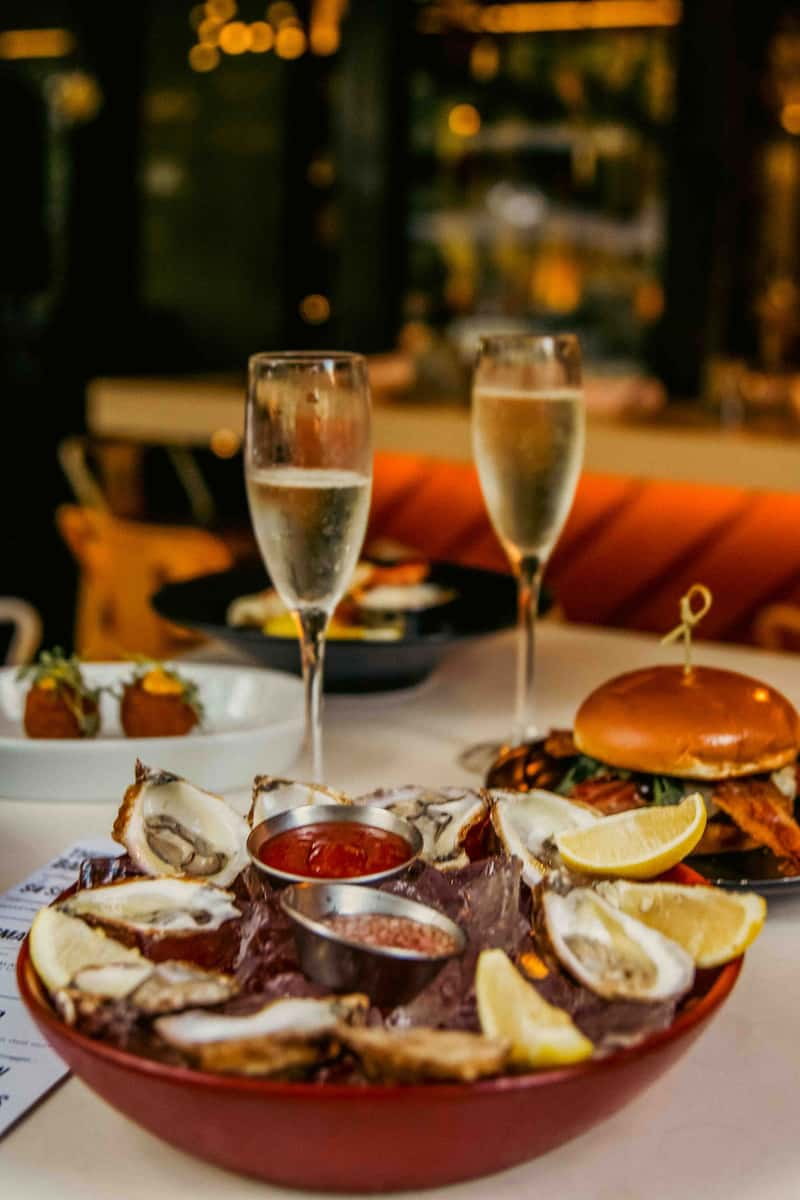
The foods that pair best with Champagne are rich, savory, and umami-forward dishes, such as oysters, aged hard cheeses, fried foods, and beef tartare. Champagne's high acidity and toasty, yeast-driven complexity cut through fat and salt, creating a precise palate contrast. A published study in PubMed Central (NIH) describes Champagne's minimum 15-month maturation period following in-bottle secondary fermentation, a process that can contribute to the wine's depth and brioche-like character.
How Does Champagne Pair With a Premium Steakhouse Menu at Beauty and the Butcher in Coral Gables?
Champagne pairs with a premium steakhouse menu by cutting through rich fats with high acidity and fine bubbles, lifting the palate between bites. This section covers how Beauty and the Butcher's cocktail program complements sparkling wine occasions, and what the key differences covered in this article mean for your next visit.
Can Creative Cocktails at Beauty and the Butcher Complement Sparkling Wine Occasions?
Yes, creative cocktails at Beauty and the Butcher can complement sparkling wine occasions, particularly when sparkling wine is incorporated directly into the drink. The International Bartenders Association's Old Cuban cocktail recipe calls for shaking the non-sparkling ingredients with ice first, then topping the strained pour with sparkling wine — a method that helps avoid shaking the carbonated ingredient. Rose champagne and sparkling wine pair especially well with steak tartare, according to the International Wine and Food Society's beef pairing guide, making them natural fits alongside Beauty and the Butcher's beef tartare starter. Research from Purdue University found no significant country-of-origin effect on sparkling-wine purchasing intentions among its surveyed consumers, while Beauty and the Butcher's 30-seat bar offers a setting for exploring different wine and cocktail preferences. For special celebrations, the elevated ambiance and chef-driven menu create exactly the kind of occasion where a well-chosen sparkling cocktail becomes part of the memory.
What Are the Key Differences Between Prosecco and Champagne We Covered?
The key differences between Prosecco and Champagne covered in this article are grape variety, production method, growing region, and sweetness range. As Alan Tardi, wine teacher and Prosecco US Ambassador, stated: "Champagne and Prosecco are two very different wines with fundamental differences: different grape varieties, different growing areas, and different production methods." Prosecco's sweetness spans six DOC classifications, from Brut Nature (0 to 3 g/litre) through Demi-sec (32 to 50 g/litre), mirroring Champagne's own dosage scale. Understanding these distinctions helps diners at Beauty and the Butcher select the sparkling wine that best matches each course, from a brut Champagne alongside dry-aged beef to a fruitier Prosecco with lighter seasonal starters.